
New foods
What is the 3-day rule for baby food, and do you still need it?
Wait three days between new foods, or don't bother? Guidance differs more than you'd think. Here's where the rule comes from, when it really matters, and a practical way to follow it.
Quick answer
The 3-day rule means waiting a few days after introducing a brand-new food before adding the next one, so that if your baby reacts, you know which food caused it. The CDC and the American Academy of Pediatrics suggest one new single-ingredient food every 3 to 5 days. Other guidance, such as the NHS and Australia's ASCIA, focuses on introducing common allergens one at a time. The rule matters most for allergens like egg, peanut, dairy, wheat and sesame.
Ask ten parents about the 3-day rule (sometimes called the 4-day or wait rule) and you'll get ten different answers. Some follow it strictly for every carrot and pear. Others ignore it entirely. The truth is in between, and it comes down to what the rule is for.
Why the rule exists
The point is traceability. If you introduce egg on Monday, peanut on Tuesday and yogurt on Wednesday, and your baby has a rash or an upset tummy on Wednesday evening, which food was it? Spacing new foods gives each one a window of its own.
The window needs to be a few days long because not every reaction is immediate. According to the NHS, allergic reactions usually happen within a few minutes of a new food but can take up to 2 hours, and in some allergies, such as cow's milk allergy, up to 3 days.
What the guidelines say
| Source | What it says |
|---|---|
| CDC (US) | Wait 3 to 5 days between each new food, and introduce potentially allergenic foods when you introduce other foods. |
| American Academy of Pediatrics | Its starting-solids guidance says one "single-ingredient" new food every 3 to 5 days. Its allergen guidance says one new food at a time, waiting at least a day before starting another. |
| NHS (UK) | Introduce the foods that can trigger allergic reactions one at a time so that you can spot any reaction. |
| ASCIA (Australia) | When introducing new common allergy-causing foods, only introduce one new food at the same meal. |
They all agree on the principle, one new allergen at a time, but differ on how long to wait, from a day to five. If you're not sure which approach suits your baby, ask your pediatrician. Babies with severe eczema or an existing food allergy may need a more careful plan.
Does it apply to every food?
The rule is most useful for the foods most likely to cause a reaction: cow's milk, egg, peanut, tree nuts, wheat, soy, sesame, fish and shellfish. Many families take a lighter approach to low-risk foods like most fruits, vegetables and grains, combining them more freely while still giving each new allergen its own few days.
There's a practical reason not to apply a strict wait to every food: at one new food every 3 to 5 days, getting through the variety babies benefit from would take most of the first year. Spacing out the allergens while letting the low-risk foods flow keeps both traceability and variety.
Can my baby try two new foods on the same day?
For two low-risk foods, many parents do. What to avoid is two new allergens at the same meal, or close enough together that you couldn't tell them apart if there was a reaction. If your baby has eczema or a known allergy, follow your pediatrician's plan.
A practical way to follow it
| Day | New allergen | Everything else |
|---|---|---|
| 1 | Egg, a small amount in the morning | Familiar foods |
| 2–3 | Egg again, a bit more each time | Familiar foods plus a new vegetable or fruit |
| 4 | Peanut, thinned smooth peanut butter | Keep egg going |
| 5–6 | Peanut again | A new grain or fruit |
| 7 | Dairy, such as plain full-fat yogurt | Keep egg and peanut going |
Offer new allergens earlier in the day so you can watch for a couple of hours, and once each one goes well, keep it in the diet: ASCIA recommends at least once a week.
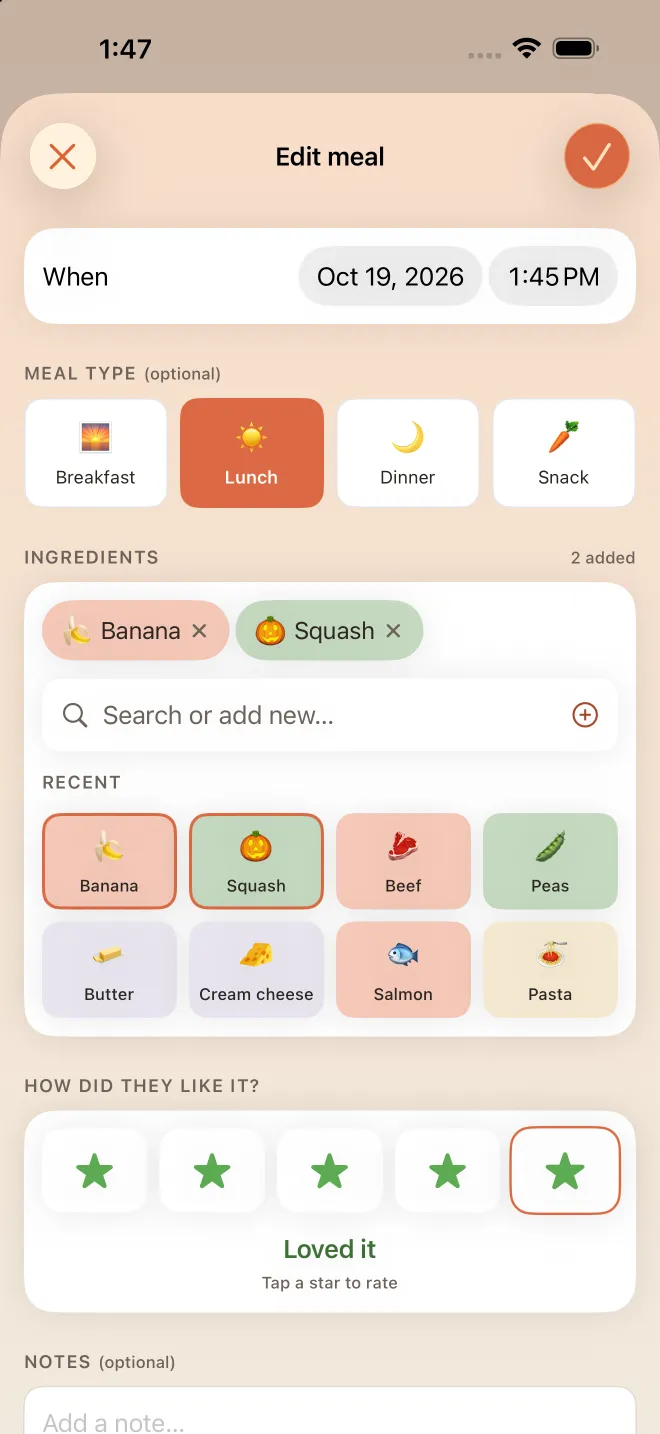
Follow the 3-day rule in AllerLog
- See what's newThe Today screen counts how many new foods your baby has had this week. With Premium, Newly introduced lists every food from the last 7 days.
- Get a check-in after first tastesAny brand-new ingredient triggers a check-in 3 hours later, and flagged allergens get one after an hour.
- Score the following daysSleep and poop scores for the meals after a new food show whether anything changed in that window.
- Keep allergens goingThe Allergens filter lists every flagged food; open one to see how often and how recently it was served.
Frequently asked questions
Why three days?
Because not every reaction is immediate. Most allergic reactions happen within minutes to 2 hours, but the NHS notes that some, such as cow's milk allergy, can take up to 3 days to show. Leaving a few days before the next new food means a delayed reaction still has one obvious suspect.
What if my baby only had a tiny taste?
A taste still counts as a first exposure for spotting a reaction. Many parents offer the same food again over the next day or two, building up the amount, before moving on to the next new allergen.
What if my baby reacts during the waiting days?
Stop that food and contact your pediatrician, or emergency services if the reaction is severe. ASCIA advises that a reaction to one allergen isn't a reason to stop introducing the others, but get medical advice before you continue.
Sources & further reading
- When, what, and how to introduce solid foods — CDC
- Starting solid foods — American Academy of Pediatrics, HealthyChildren.org
- When to introduce egg, peanut butter and other common food allergens — American Academy of Pediatrics, HealthyChildren.org
- Food allergies in babies and young children — NHS
- How to introduce solid foods to babies for allergy prevention — ASCIA
AllerLog is a tracking and journaling tool that helps you and your pediatrician spot patterns. It is not a medical device and does not diagnose, treat or prevent any condition. This page is general information, not medical advice: always talk to a qualified healthcare professional about your child's diet, allergies and health. If your child has trouble breathing, swelling of the face or tongue, widespread hives, repeated vomiting or becomes floppy or pale after eating, call your local emergency number straight away.