Digestion
Why is my baby gassy after starting solids?
New foods mean new work for a little gut, and a lot of parents notice a gassier, grumpier baby in the first weeks of solids. Here's why, and what helps.
Quick answer
Babies are often gassier after starting solids because their gut is meeting fiber and new carbohydrates for the first time, and gut bacteria produce gas as they break them down. Beans, lentils, broccoli, cauliflower, cabbage, prunes, pears and oats are common culprits. It usually settles within a few weeks. Gas with pain, vomiting, diarrhea, blood in the poop or poor weight gain is worth checking with your pediatrician.
Until now, your baby's gut has only had to deal with breast milk or formula. Solids bring fiber, starch and natural sugars it hasn't handled before, and the bacteria that help digest them make gas as a by-product. Add in some swallowed air while your baby learns to eat, and the occasional bout of constipation, and a gassier baby is no surprise.
The good news: most of the foods that cause gas are exactly the ones you want in your baby's diet. Gas on its own isn't a reason to drop them.
Foods that commonly cause gas
| Food group | Examples | Why |
|---|---|---|
| Beans & lentils | Chickpeas, lentils, black beans | Complex sugars that gut bacteria ferment |
| Cruciferous vegetables | Broccoli, cauliflower, cabbage, Brussels sprouts | Fiber and sulfur compounds |
| "P" fruits & prunes | Pears, prunes, plums, apples | Natural sugar alcohols (sorbitol) and fiber |
| Whole grains | Oats, barley, whole-wheat | Fiber |
| Onion & garlic | In family-style meals | Fermentable carbohydrates |
| Dairy | Yogurt, cheese, milk in cooking | Some babies are sensitive to it; worth watching if gas comes with other symptoms |
How to ease the gas
- Go slowly with high-fiber foods. Start with small portions and build up over a few days.
- Cook vegetables until soft, and mash or blend beans and lentils well.
- Offer sips of water with meals from around 6 months, which also helps prevent constipation.
- Slow the pace. Feed your baby sitting upright, and let them set the speed so they swallow less air.
- Try gentle tummy massage in a clockwise direction, or "bicycle legs", to help move trapped gas.
- Watch for constipation. Hard poops and straining often come with extra gas. See baby constipated after starting solids.
Normal gas or a food that doesn't agree?
| Usually normal | Worth talking to your pediatrician |
|---|---|
| Passing more gas, but otherwise happy | Screaming, drawing up the legs, hard to settle for long periods |
| Eating and growing well | Refusing food, vomiting, or poor weight gain |
| Poop a little smellier or looser | Diarrhea, mucus or blood in the poop |
| Settles within a few weeks | Gas and discomfort after the same food, every time |
| A rash, swelling or eczema flare alongside the gas |
Track gassy days in AllerLog
- Log the mealEvery ingredient, so the beans in the stew and the broccoli on the side are both on record.
- Note the gasA quick "very gassy" in the meal's notes, plus a sleep score for the evening and night after.
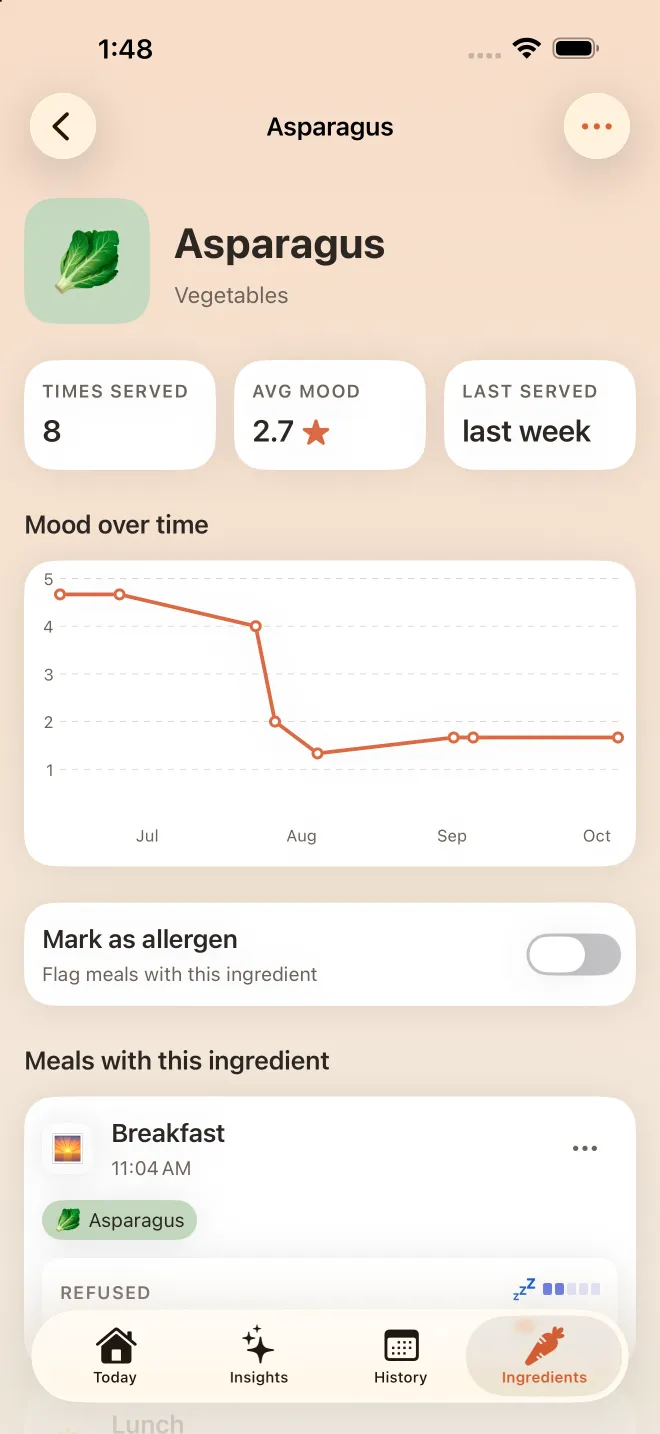
- Check the ingredientOpen the suspect food to see how many times it's been served and how its score trends. One gassy evening is noise; a falling line is a pattern.
- Re-offer, smallerIf a healthy food seems to cause gas, try a smaller portion, cooked softer, and log it again before deciding.
Frequently asked questions
Why is my baby gassy after oatmeal?
Oats are high in fiber, which gut bacteria ferment, producing gas. It's usually harmless and settles as your baby gets used to them. Try a smaller portion, make it a little thinner, and make sure your baby isn't constipated.
Can gas keep my baby awake at night?
It can. Trapped gas and tummy discomfort are a common reason for unsettled evenings and night wakings in the first weeks of solids. If gassy nights keep following the same food, track it.
Do gas drops help?
The evidence that simethicone gas drops work is limited, though many parents try them. Ask your pediatrician or pharmacist before giving any medicine to your baby.
Sources & further reading
- Starting solid foods — American Academy of Pediatrics, HealthyChildren.org
- Your baby's first solid foods — NHS
- Gas (flatulence) — AboutKidsHealth, The Hospital for Sick Children (SickKids)
- Abdominal pain in infants — American Academy of Pediatrics, HealthyChildren.org
- Food intolerance — NHS
AllerLog is a tracking and journaling tool that helps you and your pediatrician spot patterns. It is not a medical device and does not diagnose, treat or prevent any condition. This page is general information, not medical advice: always talk to a qualified healthcare professional about your child's diet, allergies and health. If your child has trouble breathing, swelling of the face or tongue, widespread hives, repeated vomiting or becomes floppy or pale after eating, call your local emergency number straight away.