Reactions
Baby rash after eating a new food: allergy or irritation?
Red cheeks after the first strawberries is one of the most common scares of starting solids. Usually it's the skin, not the immune system. Here's how to tell the difference.
Quick answer
Redness or a rash only around the mouth, where the food touched the skin, after acidic foods like tomatoes, citrus or strawberries, is usually skin irritation, not an allergy, especially if your baby is otherwise happy. ASCIA says this isn't usually an allergic reaction and the food can be offered again. Hives on the face or body, swelling of the lips or eyes, vomiting or coughing point to an allergic reaction: stop the food and call your doctor, or emergency services if breathing is affected.
Babies eat with their whole face. Tomato sauce ends up on cheeks, strawberry juice runs down chins, and baby skin is thin and sensitive. So it's very common to see red patches around the mouth during or after a meal, and it's easy to assume the worst. Most of the time, it's the food irritating the skin from the outside.
Irritation or allergic reaction?
| Skin irritation (usually harmless) | Allergic reaction | |
|---|---|---|
| Where | Only where the food touched: lips, chin, cheeks | Can spread beyond the mouth, to the face, neck or body |
| What it looks like | Flat redness or blotches | Raised, itchy welts (hives), swelling of lips, face or eyes |
| Other symptoms | None: your baby is happy and well | Vomiting, coughing, sneezing, runny nose, unusual fussiness or drowsiness |
| Timing | During or just after eating; tends to fade once the face is wiped | Usually within minutes to 2 hours of eating |
The NHS North West Allergy Network makes the same distinction: foods that irritate the skin around the mouth don't need to be removed from the diet, whereas facial hives, a swollen lip or vomiting are signs of an allergic reaction.
Foods that commonly irritate the skin
Acidic foods are the usual culprits. The American Academy of Pediatrics notes that skin irritation is often caused by acids in foods such as orange juice and tomato products, and Allergy UK lists strawberries, tomatoes and citrus fruits as foods that can irritate the skin without meaning a food allergy. Other acidic fruits, like pineapple and kiwi, can do the same.
What to do
- Wipe your baby's face gently with water and watch for 10 to 20 minutes. Irritation tends to settle; hives and swelling don't.
- Check the rest of your baby. Look at the neck, chest and body for hives, and watch for swelling, vomiting or coughing.
- Take a photo and note the time and the food.
- If it was only irritation, it's usually fine to offer the food again, perhaps with a quick wipe partway through the meal.
- If you're not sure whether it was hives, or there were any other symptoms, pause that food and talk to your pediatrician before offering it again.
Call your emergency number if…
your baby has difficulty breathing, wheezing, swelling of the tongue or throat, a hoarse cry, widespread hives with vomiting, or becomes pale, floppy or unresponsive after eating.
Rashes that aren't about food
Plenty of baby rashes have nothing to do with what was eaten: eczema, drool rash, heat rash and the rashes that come with common viruses are all very common in the first year. If a rash isn't linked to meals, or keeps coming back regardless of food, mention it to your pediatrician.
Keep track in AllerLog
- Add it to the mealEdit the meal and note "red around mouth after strawberries, faded in 15 min".
- Keep your photos togetherAllerLog doesn't store meal photos, so keep them in your Photos app and note the time in the meal.
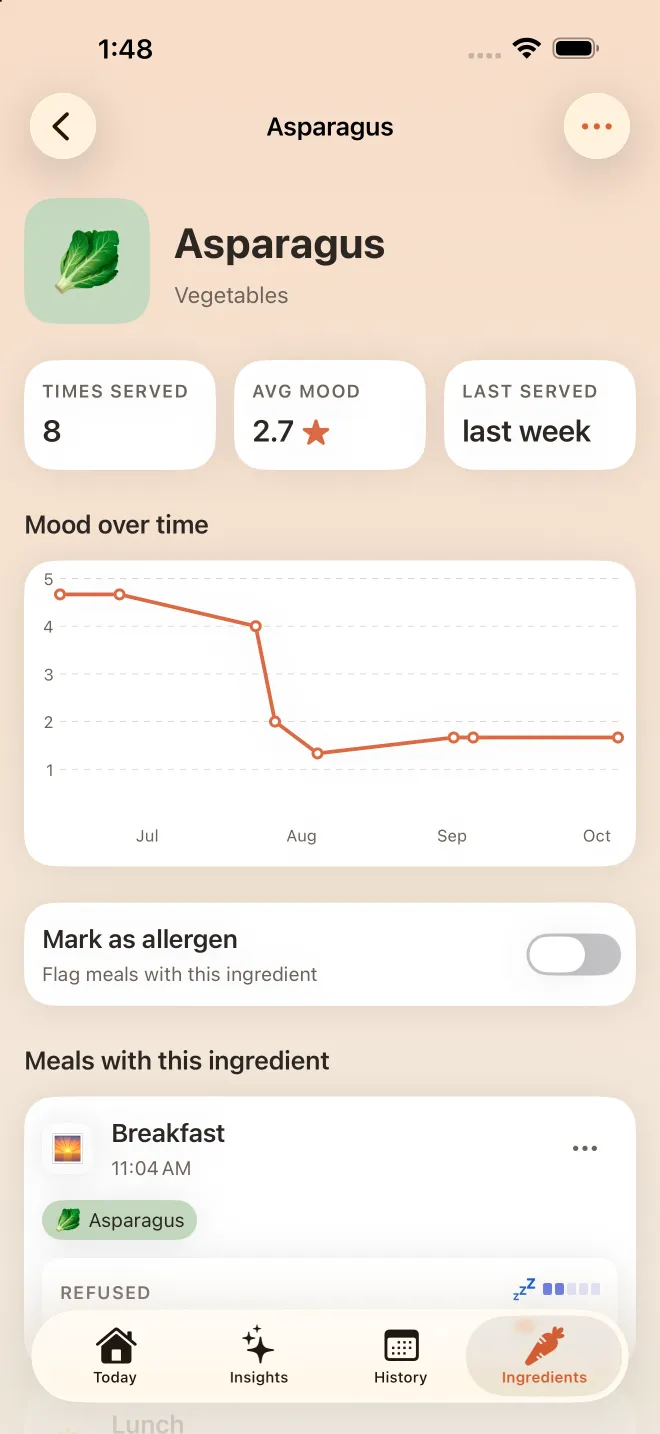
- Flag it if you're unsureSwitch on Mark as allergen for the food, and you'll get a check-in an hour after the next meal that contains it.
- See if it repeatsThe ingredient's page lists every meal it was in, so a one-off and a pattern look very different.
Frequently asked questions
Should I stop giving the food after a rash around the mouth?
If it was only redness where the food touched the skin and your baby was otherwise well, ASCIA advises it isn't usually an allergic reaction and the food can be offered again. If there were hives elsewhere, swelling, vomiting or coughing, stop the food and get medical advice before trying it again.
Can a food rash appear hours later?
Yes. Some delayed allergies show up as an eczema flare hours or even days after the food. The NHS notes that some allergies, such as cow's milk allergy, can take up to 3 days to cause symptoms.
Should I take a photo?
Yes, if it's safe to. Rashes often fade before you see a doctor, so a clear photo with the time noted helps a lot.
Sources & further reading
- How to introduce solid foods to babies for allergy prevention — ASCIA
- Weaning and introducing your baby onto solids (factsheet) — Allergy UK
- Weaning advice — NHS North West Allergy Network
- Food allergies in children — American Academy of Pediatrics, HealthyChildren.org
- Food allergies in babies and young children — NHS
AllerLog is a tracking and journaling tool that helps you and your pediatrician spot patterns. It is not a medical device and does not diagnose, treat or prevent any condition. This page is general information, not medical advice: always talk to a qualified healthcare professional about your child's diet, allergies and health. If your child has trouble breathing, swelling of the face or tongue, widespread hives, repeated vomiting or becomes floppy or pale after eating, call your local emergency number straight away.