
Reactions
How long after eating can a baby have an allergic reaction?
Some reactions happen before the bowl is empty. Others show up the next morning, in the diaper. Here's the timeline, and how long to keep an eye on your baby after a new food.
Quick answer
Immediate allergic reactions usually start within minutes and up to about 2 hours after eating, with signs like hives, swelling, vomiting or coughing. Delayed reactions can take several hours, and up to about 3 days and tend to show up as diarrhea, mucus or blood in the stool, reflux, eczema flares or poor sleep. Repeated, heavy vomiting 1 to 4 hours after a food can be FPIES, which needs a doctor urgently.
Not all food reactions look the same, and they don't all happen on the same clock. That's why a reaction can be easy to miss: the symptom and the food are often hours apart. Knowing the three main timelines helps you know what to watch for, and for how long.
Immediate reactions: minutes to 2 hours
These are "classic" food allergies, driven by IgE antibodies. They usually begin within minutes and nearly always within a couple of hours of eating. Signs include:
- hives (raised, itchy welts) or redness, often starting around the mouth
- swelling of the lips, face or eyes
- vomiting, sometimes suddenly after the meal
- coughing, sneezing, a runny nose or watery eyes
- unusual tiredness, irritability or floppiness
Rarely, an immediate reaction becomes anaphylaxis, a severe whole-body reaction that affects breathing or circulation. In babies, signs can include difficulty breathing, wheezing, a hoarse cry, swelling of the tongue, persistent coughing, and becoming pale and floppy. This is an emergency.
Delayed reactions: hours to days
Non-IgE-mediated food allergies work differently and take longer to show. The NHS notes that in some allergies, such as cow's milk allergy, symptoms can take up to 3 days to appear. Cow's milk allergy is the most common example in babies. Because there's no immediate rash, delayed reactions are often blamed on teething, a bug or "just a bad night". Signs can include:
- diarrhea, or more frequent, looser stools
- mucus or blood in the stool
- constipation
- reflux, spitting up or vomiting
- eczema that flares or won't settle
- tummy pain, colic-like crying and disturbed sleep
This is where the next diaper and the next night matter as much as the meal itself.
FPIES: repeated vomiting 1 to 4 hours later
Food protein-induced enterocolitis syndrome (FPIES) is a rare, delayed type of food allergy that affects the gut, mostly in babies and young children. The typical sign is severe, repeated vomiting that starts usually 1 to 4 hours after eating the trigger food (often around 2 hours), sometimes followed by diarrhea, with the baby becoming very tired, floppy or pale. Common triggers include cow's milk, rice, oats, soy and egg, though any food can cause it, and most children outgrow FPIES by around age 3. FPIES often doesn't show up on standard allergy tests and is easily mistaken for a stomach bug, and an episode can lead to dehydration, so seek medical help straight away.
The timeline at a glance
| Type | When it starts | Typical signs | What to do |
|---|---|---|---|
| Immediate (IgE) | Minutes to ~2 hours | Hives, swelling, vomiting, coughing | Stop the food; call your doctor. Breathing problems or floppiness: call emergency services |
| Delayed (non-IgE) | Hours to about 3 days | Diarrhea, mucus or blood in stool, reflux, eczema, poor sleep | Log it and talk to your pediatrician |
| FPIES | Usually 1–4 hours | Repeated vomiting, pale, floppy, very tired | Get medical help straight away |
How long to watch after a new food
- The first 2 hours: stay close, especially after a common allergen. This is when most immediate reactions happen.
- The next diaper or two: score it and note anything unusual.
- That night and the next day: note sleep, mood and skin.
- The following days: keep logging meals so a slow-building pattern has somewhere to show up.
It also helps to space out new foods, particularly allergens, so that a delayed reaction can still be traced back to one suspect. That's the idea behind the 3-day rule.
Call your emergency number if…
your baby has trouble breathing, wheezing, swelling of the tongue or throat, a hoarse cry, widespread hives with vomiting, or becomes pale, floppy or unresponsive after eating. If they've been prescribed an epinephrine auto-injector, use it as instructed.
Let AllerLog keep watch
The hardest part of catching a delayed reaction is remembering to check. AllerLog does the remembering.
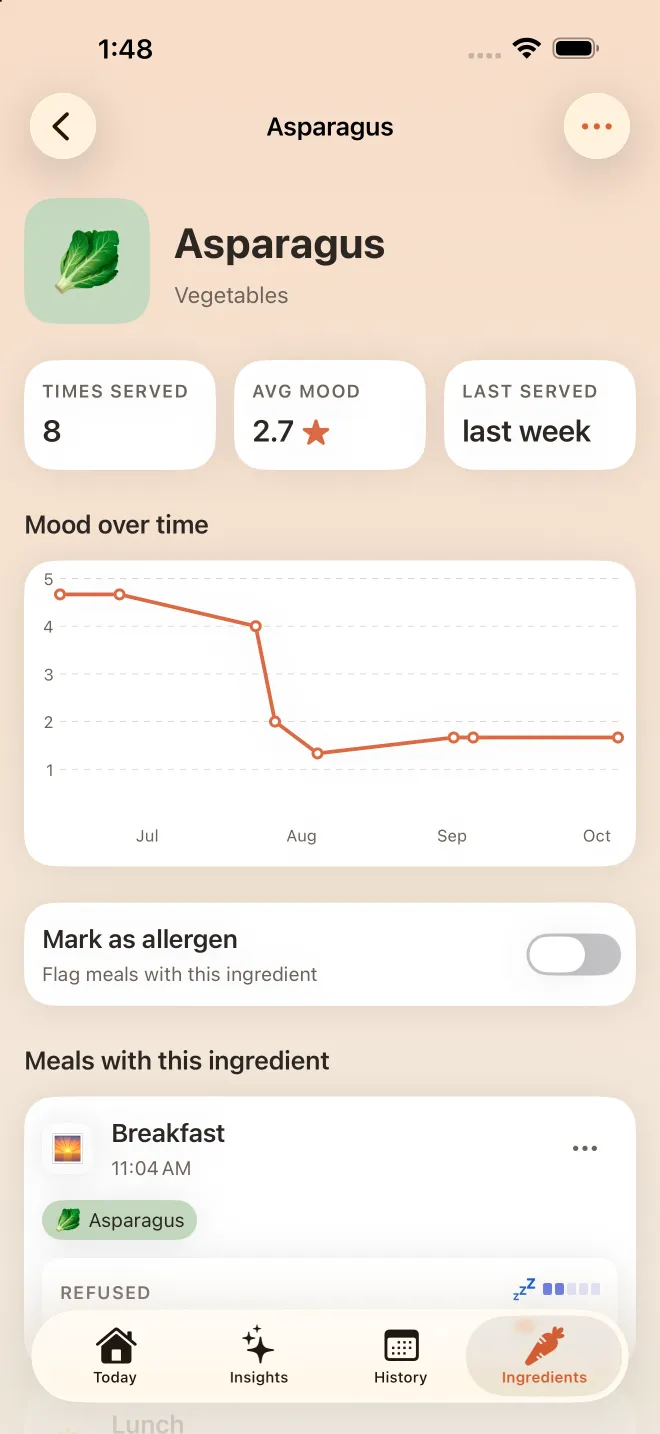
- Flag allergensSwitch on Mark as allergen for any food you're introducing. You'll get an allergen check-in 1 hour after every meal that contains it.
- Get a check-in after first tastesAny brand-new ingredient triggers a check-in 3 hours later asking how it went.
- Adjust the timingBoth delays can be changed in Settings, anywhere from 1 hour to 7 days, to match your pediatrician's advice.
- Log the aftermathTapping a check-in opens that meal's sleep and poop scores. Add symptoms and timings to the notes.
Frequently asked questions
Can a baby react to a food they've eaten before without problems?
Yes. A baby can react to a food that seemed fine the first time, which is one reason to keep logging meals after the first taste and to keep allergens in the diet regularly once they're going well.
Can a delayed reaction be serious?
Most delayed reactions are uncomfortable rather than dangerous, but FPIES can cause severe, repeated vomiting, dehydration and lethargy and needs urgent medical care. Any baby who is floppy, very pale or can't keep fluids down should be seen straight away.
Should I offer new foods in the morning?
Many parents introduce new foods, especially common allergens, earlier in the day so they can watch their baby for a couple of hours while they're awake, rather than right before a nap or bedtime.
Sources & further reading
- Recognizing and treating reaction symptoms — Food Allergy Research & Education (FARE)
- Food allergy: symptoms and types — NHS
- Food protein-induced enterocolitis syndrome (FPIES) — ASCIA
- Food protein-induced enterocolitis syndrome (FPIES) — Children's Hospital of Philadelphia
- Food allergies in babies and young children — NHS
- Anaphylaxis — NHS
AllerLog is a tracking and journaling tool that helps you and your pediatrician spot patterns. It is not a medical device and does not diagnose, treat or prevent any condition. This page is general information, not medical advice: always talk to a qualified healthcare professional about your child's diet, allergies and health. If your child has trouble breathing, swelling of the face or tongue, widespread hives, repeated vomiting or becomes floppy or pale after eating, call your local emergency number straight away.