Poop & digestion
What does food intolerance poop look like in babies?
Starting solids changes every diaper, so how do you tell "new food, normal poop" from "this food doesn't agree"? The signs to look for, and the ones that need a doctor.
Quick answer
There isn't one "intolerance poop". The signs that a food may not agree with your baby are runny or watery stools, many more stools than usual, mucus that keeps appearing, hard stools passed with pain, or a sore, red bottom, especially when the same change keeps following the same food. Blood in the poop, or poop changes with vomiting or a rash, need a call to your doctor.
Once your baby starts solids, their poop is going to change, and most of those changes are good news: a gut learning to handle new foods. That makes it tricky to know when a change actually means something. The key is to look for changes that are unusual for your baby and that repeat after the same food.
Intolerance, allergy or just solids?
Parents often say "intolerance" for any tummy trouble after a food, but in babies there are a few different things going on:
- Normal adjustment. Thicker, darker, smellier stools, bits of undigested food and colors that match what was eaten are expected once solids start.
- Food intolerance. The gut struggles to digest a food. It mainly causes gas, bloating and loose stools, and usually depends on how much was eaten.
- Delayed food allergy. Some allergies, most often to cow's milk protein, don't cause hives but show up hours or days later in the gut: diarrhea, mucus, sometimes blood, along with discomfort, reflux or eczema.
From the outside these can look similar, which is why a doctor, not a diaper, makes the call. What you can do is keep a clear record.
Poop signs a food may not agree
- Loose, watery or very frequent stools after the same food, more than once.
- Mucus, the shiny, slimy, stringy kind, that keeps appearing. The American Academy of Pediatrics notes that stools that are extremely loose, watery or full of mucus can mean the digestive tract is irritated. See mucus in baby poop after starting solids.
- Explosive stools with a lot of gas and an uncomfortable, fussy baby.
- Hard, pellet-like stools passed with straining or crying, which can point to constipation or, sometimes, a food that isn't suiting your baby.
- A sore, red bottom that flares after particular meals, even with frequent changes and barrier cream.
What else can change poop
Before blaming a food, rule out the usual suspects:
- A stomach bug or other illness, especially if other people at home are unwell
- Antibiotics or other medicines
- Lots of fruit, fruit juice or prunes, which naturally loosen stools
- A change of formula, or a big change in how much milk your baby is drinking
Call your pediatrician about…
blood or streaks of blood in the stool, black or tarry stools (after the newborn period), white, gray or very pale stools, diarrhea with fewer wet diapers or a dry mouth, or poop changes alongside vomiting, fever, a rash or poor weight gain. Repeated vomiting a few hours after a food needs urgent medical advice.
How to tell if it's the food
- Introduce one new food at a time, so a change has an obvious suspect.
- Watch the next poop or two: food usually shows up within about a day.
- Score every poop against what's normal for your baby, not against a chart.
- Look for repeats. Once is a coincidence. The same change after the same food, two or three times, is a pattern.
- Take the record to your pediatrician before cutting the food out, especially if it's a common allergen like dairy, egg or wheat.
Track it in AllerLog
- Log each mealWith every ingredient, including hidden dairy, egg and wheat.
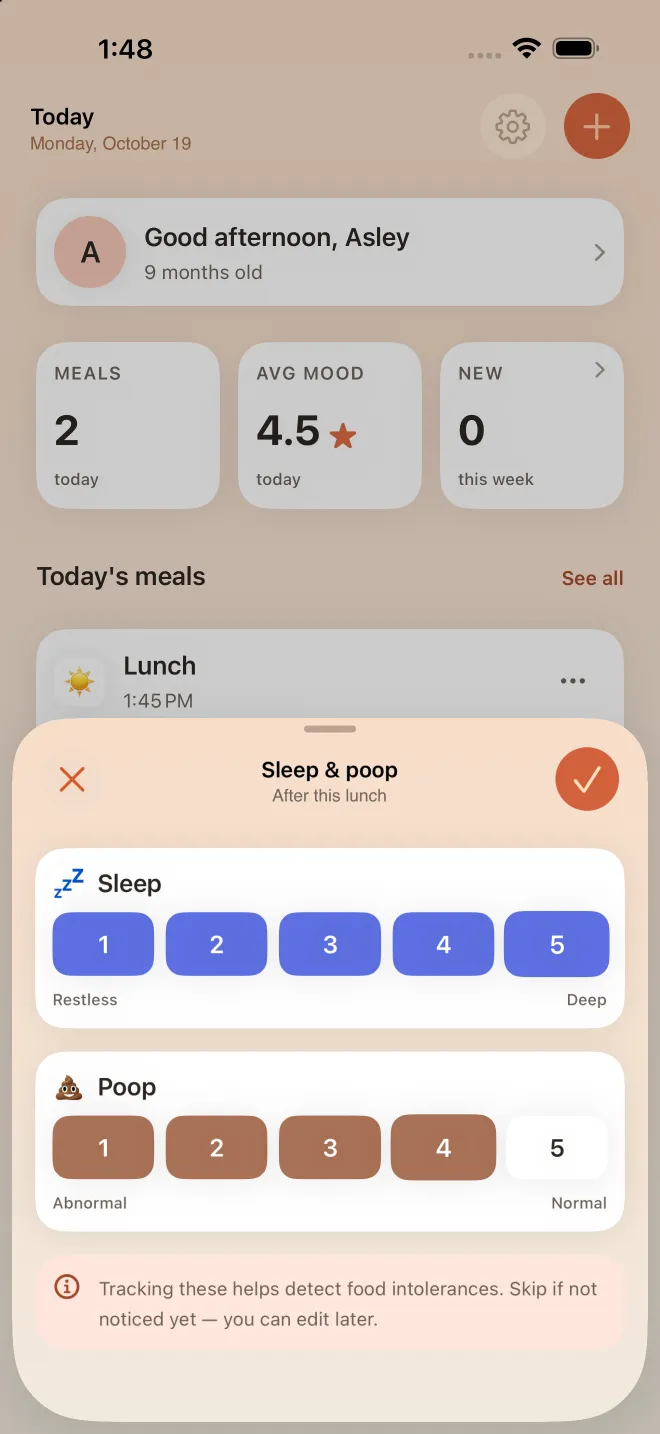
- Score the next poopIn Sleep & poop, from 1 (abnormal) to 5 (normal for your baby). Add "mucus" or "very loose" to the meal's notes.
- Read the ingredient chartEach food's 12-month chart includes the poop scores of every meal it was in.
- Let Insights narrow it downWith Premium, foods averaging 3 or less across two or more meals appear under Possible intolerances.
Frequently asked questions
Is green poop a sign of food intolerance?
Usually not. Green poop is common and often comes from green foods like spinach or peas, iron, or food moving through quickly. On its own, without other symptoms, it isn't a sign that a food doesn't agree.
Can teething cause loose poop?
Teething is often blamed for loose stools, but it isn't a well-established cause. If your baby has diarrhea that lasts more than a day or two, look for another reason, such as a stomach bug or a food that doesn't agree, and check with your pediatrician.
Should I switch formula if my baby's poop changes?
Talk to your pediatrician before switching. Poop often changes for ordinary reasons once solids start. If your doctor suspects cow's milk allergy, they may recommend a specific hypoallergenic formula rather than a standard switch.
Sources & further reading
- Food intolerance — NHS
- Food allergies in babies and young children — NHS
- Food allergies in children — American Academy of Pediatrics, HealthyChildren.org
- Abdominal pain in infants — American Academy of Pediatrics, HealthyChildren.org
- Starting solid foods — American Academy of Pediatrics, HealthyChildren.org
AllerLog is a tracking and journaling tool that helps you and your pediatrician spot patterns. It is not a medical device and does not diagnose, treat or prevent any condition. This page is general information, not medical advice: always talk to a qualified healthcare professional about your child's diet, allergies and health. If your child has trouble breathing, swelling of the face or tongue, widespread hives, repeated vomiting or becomes floppy or pale after eating, call your local emergency number straight away.