
Cow's milk allergy
CMPA symptom diary: what to track when your baby has cow's milk allergy
Cow's milk allergy is one of the most common food allergies in babies, and the delayed kind is hard to pin down. A good symptom diary is what turns hunches into a diagnosis, and a diagnosis into a plan.
Quick answer
A CMPA symptom diary records every food containing cow's milk (including hidden dairy), when it was eaten, and the symptoms over the following hours and days: stools (including mucus or blood), vomiting or reflux, skin and eczema, sleep and mood. Delayed (non-IgE) cow's milk allergy can take up to 72 hours to show, so the diary needs to cover the days after dairy, not just the meal. Bring it to your doctor before cutting dairy out.
Cow's milk protein allergy (CMPA, or cow's milk allergy) is an immune reaction to the proteins in milk, mainly casein and whey. It's one of the most common food allergies in babies: ASCIA estimates more than 2% of infants in Australia and New Zealand are affected. Most children outgrow it.
The challenge is that its most common form is hard to spot. Many of its symptoms, such as eczema, colic, reflux and diarrhea, are common in babies anyway, and as Allergy UK points out, milk allergy is only one of many possible causes. A careful diary is how you and your doctor tell the difference.
Immediate vs delayed cow's milk allergy
| Immediate (IgE-mediated) | Delayed (non-IgE-mediated) | |
|---|---|---|
| When | Within minutes, up to about 2 hours | From about 2 hours, up to 72 hours |
| Typical signs | Hives, swelling of the lips, face or eyes, vomiting, tummy pain; rarely anaphylaxis | Eczema flares, reflux, vomiting, diarrhea, blood or mucus in stool, colic-like crying |
| Allergy tests | Skin or blood tests are usually positive | Tests are usually negative; diagnosed by removing and reintroducing milk under guidance |
| How common | Less common | The most common type |
What to track in a CMPA diary
- Every source of cow's milk, including hidden ones: butter, cheese, yogurt, cream, ghee, milk in baked goods and sauces, and ingredients like whey, casein and milk powder on labels.
- The time and amount, so delayed symptoms can be lined up with the dairy that came before.
- Stools: consistency, frequency, and any mucus or blood.
- Vomiting, spitting up or reflux, and when it happened.
- Skin: eczema flares, hives or redness.
- Sleep and mood: restless nights, long crying spells, discomfort after feeds.
- Milk feeds: breast milk, which formula, and any changes. If your baby moves to a hypoallergenic formula, Allergy UK notes their poo may turn dark green and come less often, which is normal.
- Context: illness, teething, vaccinations.
How CMPA is usually diagnosed
For the delayed type, skin and blood tests usually don't help. Instead, a doctor may suggest a trial without cow's milk: removing it from your baby's diet (with a suitable hypoallergenic formula if formula-fed) or, for exclusively breastfed babies, sometimes from the breastfeeding parent's diet. UK guidance (the MAP guideline) is clear that this trial must be followed by reintroducing cow's milk to confirm or rule out the diagnosis, which is why the diary matters both before and after.
Don't cut dairy on your own
The NHS warns against experimenting by cutting out a major food such as milk, because it could leave your child short of the nutrients they need. Talk to your GP or pediatrician, who may refer you to a dietitian.
Once your baby is weaning
Starting solids adds a new layer: dairy can turn up in a lot of everyday foods. If your baby is avoiding cow's milk, the diary helps you check that none is slipping in. If your doctor has started a reintroduction, often using a milk ladder, the diary shows how each step goes.
Get urgent help if…
your baby has swelling of the lips, face or tongue, difficulty breathing, widespread hives, or becomes pale and floppy after milk, or has repeated, heavy vomiting a few hours after it. Call your local emergency number.
Keep your CMPA diary in AllerLog
- Dairy is flagged for youMilk and 13 other dairy foods, from butter and yogurt to cheese and kefir, are marked as allergens in the built-in library.
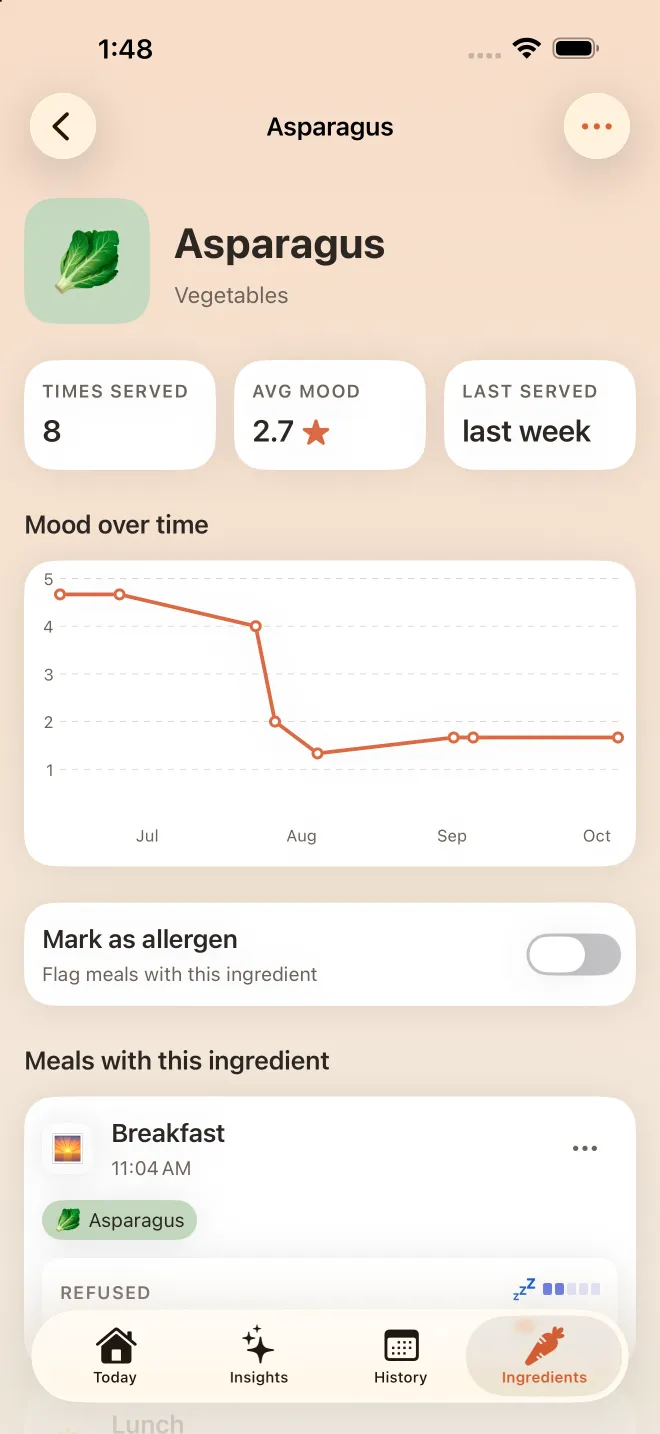
- Flag the hidden onesAdd your own ingredients, such as a particular cracker or a baby cereal with milk powder, and switch on Mark as allergen.
- Let check-ins cover the delayAn allergen check-in arrives an hour after any meal with dairy. Because delayed reactions take longer, you can stretch that delay in Settings, up to 7 days.
- Score the aftermathAdd sleep and poop scores, and note mucus, blood, reflux or eczema in the meal's notes.
- Show the patternEach dairy ingredient's chart and meal list show your doctor exactly what happened, and when.
Frequently asked questions
Is CMPA the same as lactose intolerance?
No. Cow's milk protein allergy is an immune reaction to the proteins in milk, mainly casein and whey. Lactose intolerance is difficulty digesting the sugar in milk and doesn't involve the immune system. They're managed differently, so it matters which one your doctor thinks it is.
Will my baby grow out of cow's milk allergy?
Most children do. ASCIA notes most outgrow it by the age of three to five years, and Allergy UK says most children grow out of it in early childhood, although for a few it lasts longer.
Can AllerLog track what I eat while breastfeeding?
Not directly: AllerLog is built around your baby's own meals. If you're following a dairy-free diet while breastfeeding, you can add a note to your baby's meals, but a separate record of your own diet, agreed with your doctor or dietitian, will be clearer.
Sources & further reading
- Cow's milk allergy — Allergy UK
- Cow's milk (dairy) allergy — ASCIA
- The Milk Allergy in Primary Care (MAP) guideline — GP Infant Feeding Network (UK)
- Abdominal pain in infants — American Academy of Pediatrics, HealthyChildren.org
- Food allergies in babies and young children — NHS
AllerLog is a tracking and journaling tool that helps you and your pediatrician spot patterns. It is not a medical device and does not diagnose, treat or prevent any condition. This page is general information, not medical advice: always talk to a qualified healthcare professional about your child's diet, allergies and health. If your child has trouble breathing, swelling of the face or tongue, widespread hives, repeated vomiting or becomes floppy or pale after eating, call your local emergency number straight away.