Poop & digestion
Mucus in baby poop after starting solids: what it can mean
Slimy, stringy, shiny: mucus in the diaper is unsettling. A little now and then is common. Here's when it means something, and what to do.
Quick answer
A small amount of mucus now and then can be normal. The American Academy of Pediatrics says that stools that are extremely loose, watery or full of mucus may mean the digestive tract is irritated: ease back on new solids, reintroduce them slowly, and see your doctor if it continues. Mucus with blood, diarrhea, a fussy baby, or after the same food each time can point to an infection or cow's milk allergy, so call your pediatrician.
Mucus is a normal part of the gut's lining: it helps stool move along. Most of the time you won't notice it. When you do see it, shiny, jelly-like or stringy streaks in the diaper, it usually means the gut is a little irritated. The question is by what.
Common causes after starting solids
- A gut getting used to new foods. According to the AAP, very loose, watery or mucus-filled stools after starting solids can mean the digestive tract is irritated, and slowing down with new foods helps.
- An infection. Stomach bugs often cause diarrhea with mucus, and are common once babies start daycare or mix with other children.
- Cow's milk allergy. The AAP lists blood or mucus in the stool among the signs of milk allergy in infants, and Seattle Children's notes it can cause loose, slimy stools. It's usually the delayed (non-IgE) type, so symptoms can appear hours to days after dairy.
- Other foods that don't agree. Mucus that turns up after the same food, again and again, is worth noting whichever food it is.
What to do
- Look at the whole picture. Is your baby happy, feeding well, and having plenty of wet diapers? A little mucus in an otherwise well baby is rarely urgent.
- Ease back on new foods for a few days and reintroduce them one at a time.
- Note what was eaten in the day or two before, and score each poop.
- Call your pediatrician if it continues, keeps coming back, or comes with any of the signs below.
Call your pediatrician promptly if…
- there's blood in the poop
- your baby shows signs of dehydration, such as no wet diaper for more than 8 hours, a dry mouth or no tears
- your baby has a fever, especially if they're under 12 weeks old
- there's vomiting, a swollen tummy, or your baby seems very unwell, sleepy or in pain
Is it the food?
One slimy diaper tells you very little. What matters is repetition: mucus that appears after dairy meals every time, for example, is a pattern your pediatrician will want to hear about. If cow's milk allergy is suspected, the usual next step is a supervised trial without cow's milk, followed by reintroduction to confirm. Don't start that on your own. Our CMPA symptom diary explains what to track before and during.
Track mucus against meals in AllerLog
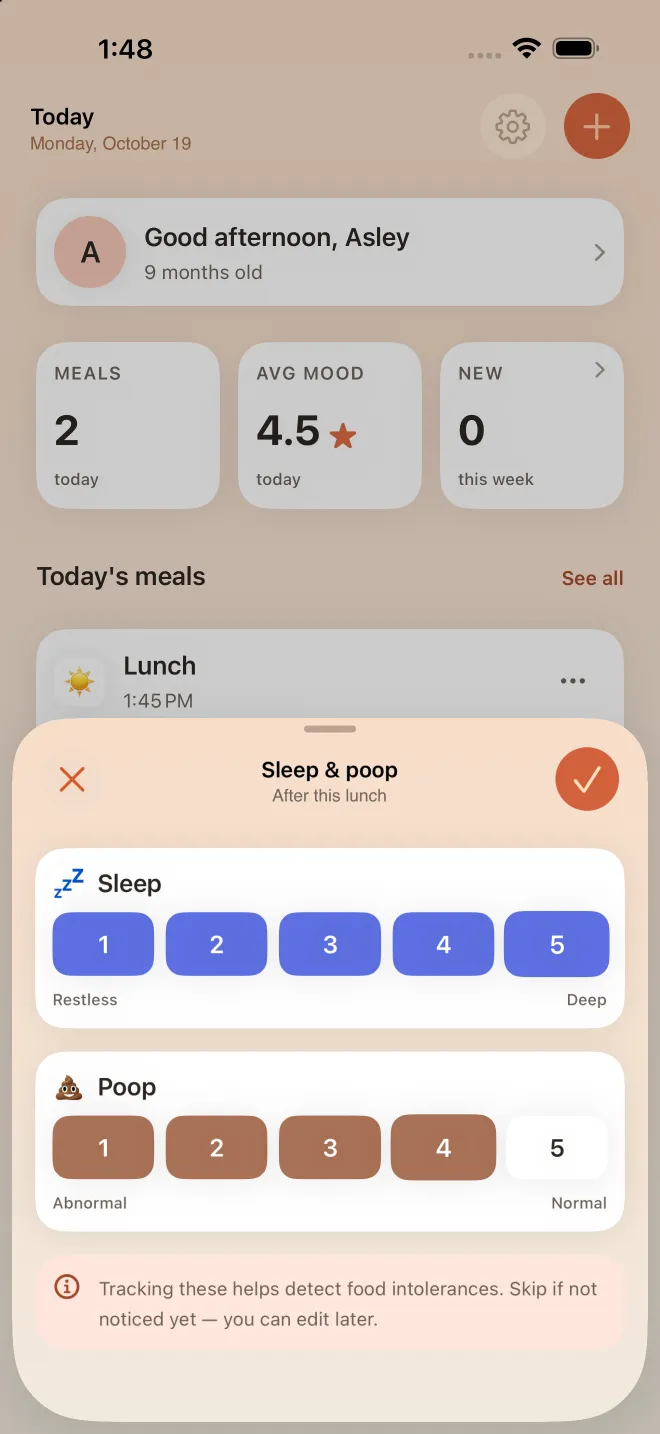
- Score the poopA mucusy poop is a low score in the meal's Sleep & poop sheet. Add "mucus" to the meal's notes.
- Watch the trendPoop over time on the Insights screen shows whether it's settling or getting worse.
- Check the suspectsOpen dairy foods like yogurt, cheese or milk in Ingredients to see how the meals they were in scored.
- Bring it to the appointmentThe ingredient page lists every meal it was in, with dates, so your pediatrician can see the pattern.
Frequently asked questions
Is mucus in poop a sign of teething?
Teething is often blamed, but it isn't a proven cause. If mucus keeps appearing, look for other explanations, such as a new food, an infection or a possible allergy, and mention it to your pediatrician.
What does mucus with blood mean?
Always call your pediatrician about blood in your baby's poop. In babies it can be linked to cow's milk allergy, an infection, or a small tear from a hard poop, and your doctor will want to check.
Should I stop giving dairy if I see mucus?
Not on your own. The NHS warns against cutting out a major food like milk without advice, because it can leave your baby short of nutrients. Keep a log and talk to your pediatrician, who can tell you whether a supervised dairy-free trial makes sense.
Sources & further reading
- Starting solid foods — American Academy of Pediatrics, HealthyChildren.org
- Abdominal pain in infants — American Academy of Pediatrics, HealthyChildren.org
- Diarrhea (0–12 months) — Seattle Children's
- Cow's milk allergy — Allergy UK
- Food allergies in babies and young children — NHS
AllerLog is a tracking and journaling tool that helps you and your pediatrician spot patterns. It is not a medical device and does not diagnose, treat or prevent any condition. This page is general information, not medical advice: always talk to a qualified healthcare professional about your child's diet, allergies and health. If your child has trouble breathing, swelling of the face or tongue, widespread hives, repeated vomiting or becomes floppy or pale after eating, call your local emergency number straight away.