Poop & digestion
Baby poop after starting solids: what's normal, food by food
Orange after carrots, black specks after banana, whole peas in the diaper: starting solids brings some surprising poop. Here's what's normal, food by food, and what isn't.
Quick answer
After starting solids, baby poop usually becomes more solid, smellier and more varied in color, often matching what your baby ate, as the American Academy of Pediatrics describes. Bits of undigested food are normal. Call your pediatrician about red or black poop that food doesn't explain, white or very pale poop, blood or lots of mucus, or diarrhea that won't settle.
If you've just started solids, you've probably already had at least one diaper that made you stop and stare. The first weeks of solids are a big change for your baby's gut, and the diaper is where you see it. Most of what you'll find is completely normal. Here's how to tell.
What changes when solids start
- Texture: from the soft, seedy or pasty stools of a milk-only diet to something thicker and more formed.
- Smell: stronger, as the gut bacteria change to handle new foods.
- Color: browner overall, with flashes of whatever your baby ate.
- Frequency: it can go up or down. Some babies poop less often; others more.
Food by food: what you might see
| Food | What you might see | Normal? |
|---|---|---|
| Carrots, sweet potato, squash | Bright orange poop | Yes |
| Spinach, peas, kale, broccoli | Dark green poop, sometimes flecks of green | Yes |
| Banana | Thin black threads or specks | Yes, these are fibers from the banana |
| Blueberries, blackberries | Dark blue or black bits, skins | Yes |
| Beets | Red or pink poop (and sometimes pee) | Yes, if beets were eaten in the last day or so |
| Tomatoes, peppers | Pieces of skin | Yes |
| Corn, peas, beans, raisins | Whole or half pieces | Yes |
| Iron-fortified cereal or iron drops | Darker green to almost black poop | Usually; mention black poop to your pediatrician if you're unsure |
| Prunes, pears, plums, peaches | Softer, looser stools | Yes |
| Lots of milk or cheese | Firmer, harder stools | Common; the AAP notes large amounts can cause constipation |
Why there's undigested food in the diaper
Babies are still learning to chew, and their digestive system is still maturing. Foods with tough skins or a lot of fiber, like peas, corn, beans, tomato skins and berries, often pass through partly intact. As long as your baby is growing well and otherwise comfortable, it's not a problem, and it fades as chewing improves. Mashing or blending tougher foods a little more helps if you'd like to see less of it.
How often should a baby poop once solids start?
There's a wide range of normal: anywhere from a few times a day to once every few days. What matters more than the number is whether the poop is soft and passed without pain, and whether there's a sudden, lasting change from what's normal for your baby. Hard, pellet-like stools with straining point to constipation, which is common in the first weeks of solids.
Colors and changes that need a doctor
Call your pediatrician about…
- Red or bloody poop that red food (like beets) doesn't explain, or streaks of blood
- Black, tarry poop after the newborn period that iron, blueberries or banana don't explain
- White, gray or very pale poop, which can be a sign of a liver problem and should be checked promptly
- Lots of mucus, especially with diarrhea or a fussy, uncomfortable baby
- Diarrhea that lasts, or any signs of dehydration such as fewer wet diapers
When poop changes might mean a food doesn't agree
A single odd diaper after a new food is almost always just a gut getting used to something new. What's worth noticing is the same change, after the same food, more than once: loose stools every time yogurt is on the menu, or mucus that appears after wheat. That kind of repeat can point to a food intolerance or a delayed allergy such as cow's milk allergy. Our guide to what food intolerance poop looks like covers the signs, and the baby poop tracker guide explains how to link each diaper to the meal before it.
Keep track in AllerLog
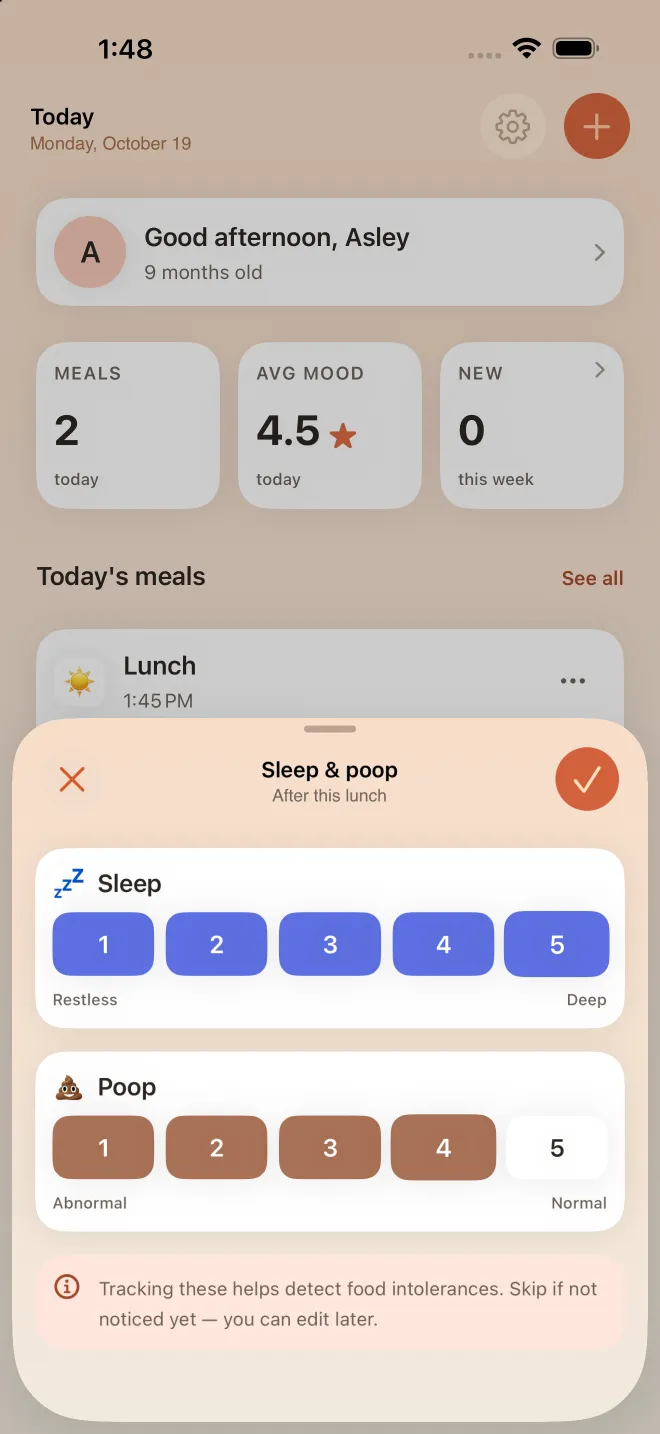
- Score the next poopOpen the meal's Sleep & poop sheet and rate the poop from 1 (abnormal) to 5 (normal for your baby).
- Note surprises"Orange", "black threads", "mucus": a word in the meal's notes is plenty.
- See the trendPoop over time on the Insights screen shows how scores move across weeks and months.
- Find the foodEvery ingredient's chart includes the poop scores of the meals it was in.
Sources & further reading
- Starting solid foods — American Academy of Pediatrics, HealthyChildren.org
- Baby poop guide — Children's Hospital Colorado
- Abdominal pain in infants — American Academy of Pediatrics, HealthyChildren.org
- Food allergies in babies and young children — NHS
AllerLog is a tracking and journaling tool that helps you and your pediatrician spot patterns. It is not a medical device and does not diagnose, treat or prevent any condition. This page is general information, not medical advice: always talk to a qualified healthcare professional about your child's diet, allergies and health. If your child has trouble breathing, swelling of the face or tongue, widespread hives, repeated vomiting or becomes floppy or pale after eating, call your local emergency number straight away.