Poop & digestion
Baby constipated after starting solids? Common causes and what helps
Hard poops, straining and a frustrated baby are a very common side effect of the first weeks of solids. Here's why it happens, what helps, and when it's worth a call to the doctor.
Quick answer
Constipation is common when babies start solids, and the American Academy of Pediatrics lists the move to solid foods as one of the usual times it happens. To help: offer sips of water with meals from around 6 months, add fiber-rich foods such as pears, prunes, plums, peaches, apricots, peas and beans, and go easy on large amounts of milk and cheese. Call your pediatrician if it lasts more than a week, seems painful, or comes with blood or vomiting.
For months, milk has done all the work. Then solids arrive, with new fiber, less fluid and a gut that hasn't handled anything like them before. It's no surprise that the first weeks of solids often come with harder, less frequent poops. In most babies it settles with a few simple changes.
Signs your baby is constipated
- Hard, dry, pebble-like or large poops that are difficult to pass
- Straining and crying, and clear discomfort while pooping
- Fewer poops than usual for your baby (the NHS uses fewer than 3 in a week as a sign in children)
- A small streak of blood on a hard poop, from a tiny tear (worth mentioning to your doctor)
Some grunting and going red in the face while pooping is normal for babies. What counts is whether the poop itself is hard and whether your baby seems uncomfortable.
Why starting solids can cause constipation
- Less fluid. Solids replace some milk, and babies don't automatically drink more to make up for it.
- A change in fiber. Both too little fiber and a sudden jump in it can upset the balance while the gut adjusts.
- Lots of dairy. The AAP notes that milk and cheese are foods that, in high amounts, can cause constipation.
- A new routine. Changes in feeding, sleep and activity all play a part.
Foods and drinks that help
| Try | Why |
|---|---|
| Sips of water with meals | The NHS advises offering sips of water from a cup with meals from around 6 months |
| Pears, prunes, plums, peaches, apricots | The AAP lists these among the high-fiber foods that help; the NHS singles out apples, pears and prunes |
| Peas and beans | Good sources of fiber in baby-friendly forms |
| Whole grains | Oats, barley and whole-wheat foods add fiber |
| Less milk and cheese, if your baby has a lot | Large amounts can firm stools up |
Go gradually with high-fiber foods, which can also bring extra gas. Gentle tummy massage and bicycling your baby's legs can help things move too. Ask your pediatrician before giving fruit juice to a baby under 12 months, or any laxative or medicine.
Call your pediatrician if…
- constipation lasts more than a week despite these changes
- your baby seems to be in a lot of pain, or cries every time they poop
- there's blood in the poop, or a swollen, hard tummy
- your baby is vomiting, refusing feeds or not gaining weight
Could it be a food that doesn't agree?
Usually not: most constipation after starting solids is about fluid and fiber. Occasionally, ongoing constipation that doesn't respond to the usual changes can be one of several signs of cow's milk allergy, especially alongside things like eczema, reflux or a very unsettled baby. If that sounds familiar, our CMPA symptom diary explains what to track before talking to your doctor.
Track it in AllerLog
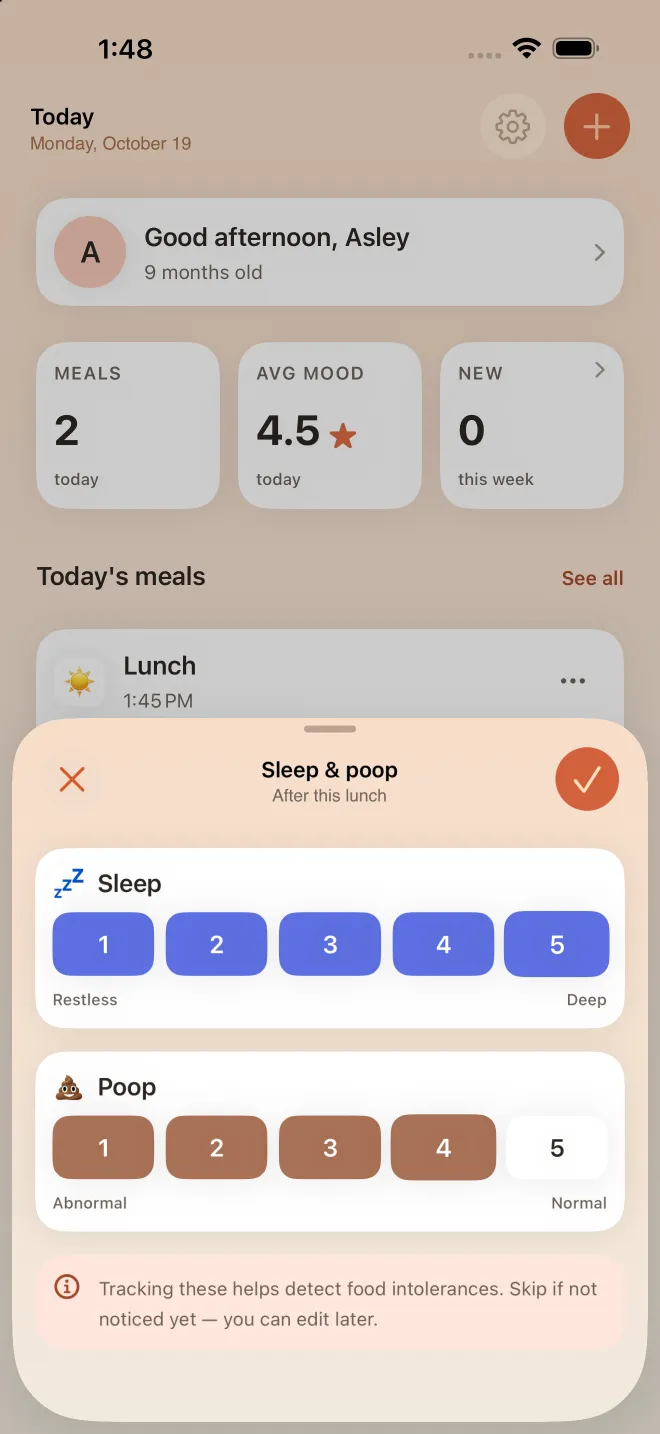
- Score every poopIn the meal's Sleep & poop sheet, a hard or painful poop is a low score. Add "hard, straining" to the notes.
- Watch the trendPoop over time on the Insights screen shows whether scores are improving after you change things.
- Check the usual suspectsOpen cheese or yogurt in Ingredients to see how often they're being served and how those meals scored.
- Log the helpersPears, prunes and peas are among the 158 built-in foods, so it's easy to see whether more of them helps.
Sources & further reading
- Abdominal pain in infants — American Academy of Pediatrics, HealthyChildren.org
- Constipation symptom checker — American Academy of Pediatrics, HealthyChildren.org
- Constipation in children — NHS
- Drinks and cups for babies and young children — NHS
- Constipation and bottle feeding — NHS Best Start in Life
AllerLog is a tracking and journaling tool that helps you and your pediatrician spot patterns. It is not a medical device and does not diagnose, treat or prevent any condition. This page is general information, not medical advice: always talk to a qualified healthcare professional about your child's diet, allergies and health. If your child has trouble breathing, swelling of the face or tongue, widespread hives, repeated vomiting or becomes floppy or pale after eating, call your local emergency number straight away.