New foods
How many times should you offer a food your baby didn't like?
The spinach went on the floor. Again. Before you cross it off for good, here's how many tries it can really take, and how to make each one count.
Quick answer
Keep offering it, calmly, many times. The NHS says it can take 10 or even more tries before a baby accepts a new food, and the CDC puts it at 8 to 10 exposures for young children. Offer a small amount next to foods your baby already likes, try different preparations, never force it, and keep a note of each try so you don't give up after two or three.
Refusing new foods is one of the most normal things a baby does. It isn't a sign that they'll never like broccoli, and it usually isn't a sign that something is wrong. Most babies need to meet a food several times before it feels safe and familiar enough to eat.
Why babies refuse new foods
- It's new. Wariness of unfamiliar foods is a normal stage of development, and it often gets stronger in the toddler years.
- The taste is strong. Bitter vegetables like broccoli, kale and spinach are an acquired taste for most of us.
- The texture is unfamiliar: lumpy after smooth, stringy, slippery.
- They're not hungry, tired or teething. A refusal at 6pm on a teething day says very little about the food.
- They're full. Babies are good at stopping when they've had enough, and the NHS advises letting them show you.
Why repeated tries work
Familiarity builds acceptance. Every time your baby sees, smells, touches or tastes a food, it becomes a little less strange. Even a try that ends with the food on the floor counts. That's why progress often looks like nothing, nothing, nothing, then suddenly a few bites.
How to re-offer a refused food
- Keep the portion tiny, and put it next to a food your baby already likes.
- Change the preparation: roasted instead of steamed, mashed instead of strips, mixed with a familiar flavor.
- Eat it yourself. Babies learn a lot by watching you enjoy a food.
- Let them explore: touching, squishing and licking all count.
- Don't pressure or bribe. The NHS advises never forcing your baby to eat; if they're not interested, wait until next time.
- Give it a break and come back. The AAP suggests waiting a week or two before re-offering a food to a picky eater.
Refusal or reaction?
Refusal on its own isn't a sign of food allergy. But a baby who consistently refuses one particular food, especially alongside symptoms such as a rash around the mouth, swelling, vomiting, coughing or rubbing their mouth or tongue, may be telling you something. If refusal comes with symptoms, stop that food and talk to your pediatrician.
How to keep count
The main reason parents give up on a food is that they think they've tried it many more times than they actually have. A quick rating after every meal fixes that: you'll know whether it's been two tries or ten, and you can see whether the reaction is slowly getting better.
Track every try in AllerLog
- Rate each tryAfter the meal, tap a star for How did they like it?, from Refused to Loved it.
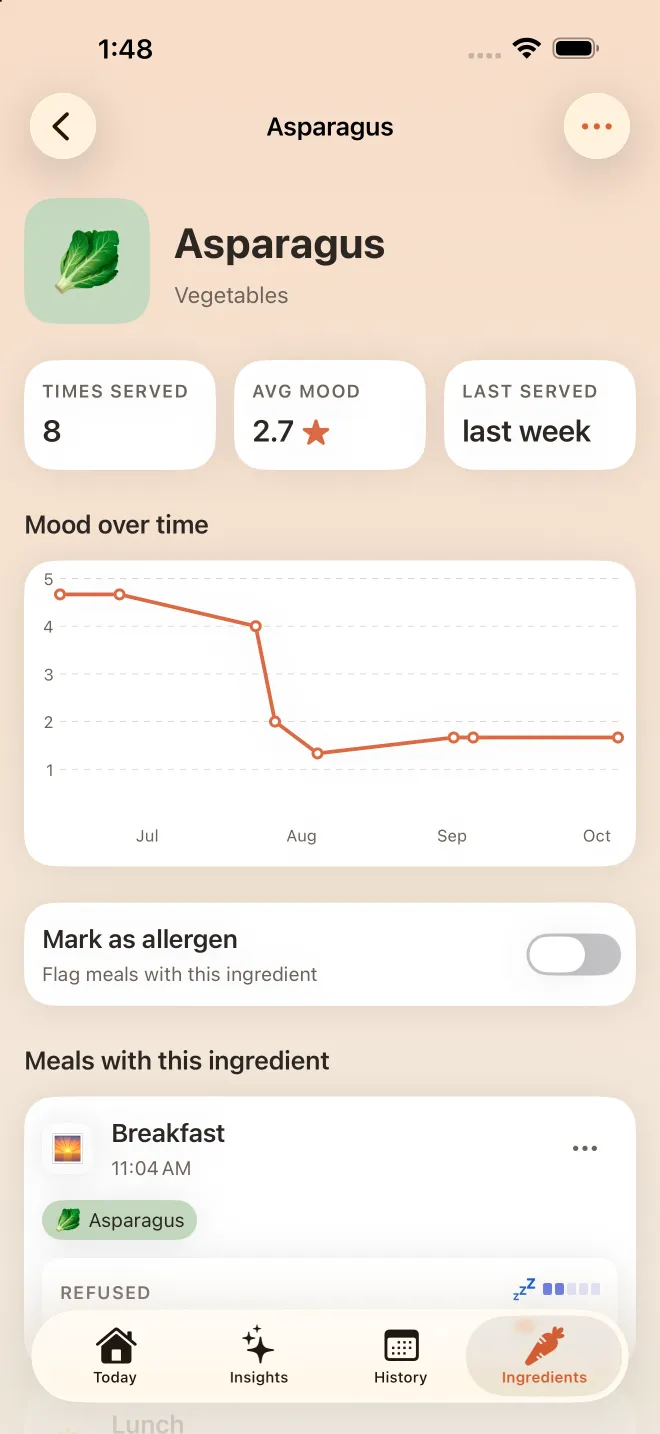
- See the countOpen the ingredient to see how many times it's been served and when it was last on the menu.
- Watch the trendThe ingredient's chart shows whether those stars are slowly climbing.
- Find the foods to re-offerWith Premium, the Least liked filter lists the foods averaging 3 or less, a ready-made list of foods to try again in a new way.
Frequently asked questions
Is it okay to hide vegetables in other foods?
Mixing vegetables into foods your baby likes is fine for nutrition, but keep offering them on their own too. Babies learn to accept foods they can see, smell and touch, so visible tries are what build acceptance.
When should I stop offering a food?
Rarely. If your baby keeps refusing a food, take a break of a week or two and try again, perhaps prepared differently. The exception is any food that causes symptoms like a rash, swelling or vomiting: stop that one and talk to your pediatrician.
Is it normal for a baby to suddenly refuse a food they loved?
Yes, very. Appetite and preferences shift with teething, illness, growth spurts and simply getting older. Keep offering it alongside other foods, and note it if the refusal comes with any symptoms.
Sources & further reading
- How to shape healthy eating habits for picky eaters — American Academy of Pediatrics, HealthyChildren.org
- Help your baby enjoy new foods — NHS
- Picky eaters — CDC
- Your baby's first solid foods — NHS
- Starting solid foods — American Academy of Pediatrics, HealthyChildren.org
AllerLog is a tracking and journaling tool that helps you and your pediatrician spot patterns. It is not a medical device and does not diagnose, treat or prevent any condition. This page is general information, not medical advice: always talk to a qualified healthcare professional about your child's diet, allergies and health. If your child has trouble breathing, swelling of the face or tongue, widespread hives, repeated vomiting or becomes floppy or pale after eating, call your local emergency number straight away.